
NVIDIA Earnings, H200 China Deal, and Why NVDA Could Sell Off Again
NVIDIA beat earnings, raised guidance, and still sold off. This breakdown covers the H200 China deal, the post-earnings fade, and what could happen next.
$NVDA$NVIDIA EARNINGSH200 CHINA DEAL
So what about this upcoming report? Could the same thing happen again? Yes. Absolutely.
The risk of another sell-the-news reaction is still real. In fact, I would say it is the base-case risk unless NVIDIA delivers something that is clearly above and beyond what investors are expecting. A solid beat is probably not enough. The company likely needs a genuine blowout on guidance, plus confidence around demand durability, supply, margins, and China exposure. The market has already seen enough strong quarters from NVIDIA that simply “beating and raising” may no longer be enough to keep the stock running.
That is where the H200 China deal comes in. The H200 story is a real positive for NVIDIA. The U.S. authorized the sale of H200 chips to 10 Chinese companies, which is important because it opens the door to more revenue and improves the company’s forward demand narrative. It also helps tell a better story about NVIDIA’s global market opportunity, especially in a market like China where access has been a major source of uncertainty.
But there is a catch. The deal is not as clean as it sounds. Reports indicated that China has not fully cleared shipments, and there has been intervention that slowed or effectively halted deliveries. That means the authorization is bullish, but not fully monetized yet. If the deal is still tangled up in political and regulatory friction, then it is more of a tailwind than a slam dunk.
My honest read is this: the H200 deal helps, but it does not guarantee a bullish reaction. The company still has to clear a very high bar. The macro backdrop is not ideal. Yields are a headwind. Oil is a headwind. Valuation is a headwind. And when those things stack up against a stock that has already had a huge run, the market often chooses to fade the strength rather than chase it. NVIDIA can absolutely deliver another strong quarter and still get sold. The issue is that everyone knows it, everyone expects it, and everyone is trying to front-run the next leg higher.
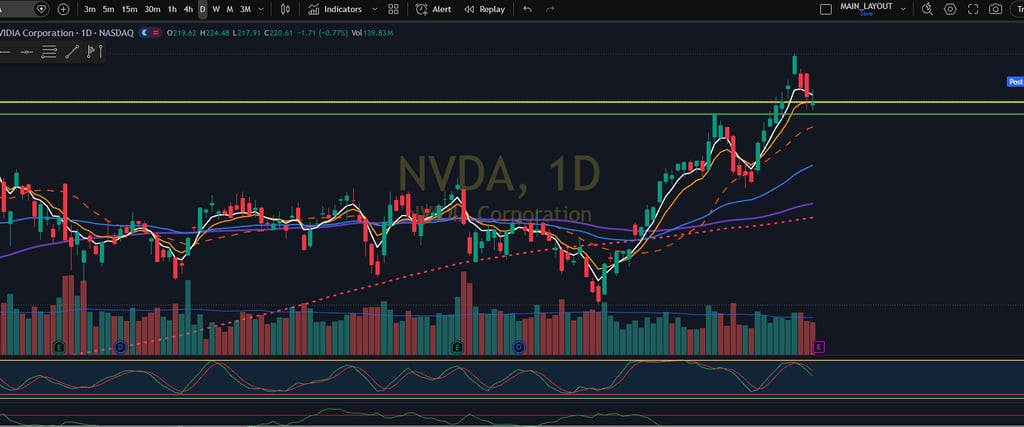
There is also a broader behavioral issue at work. The AI trade has become one of the most crowded and most watched themes in the market. That means every NVIDIA report is not just about NVIDIA. It is also about the entire AI ecosystem: semiconductors, networking, cloud infrastructure, data centers, and even software names tied to AI spending. When one name is viewed as the bellwether for the whole group, the market tends to overreact. A great report can drive the entire sector higher, but a merely good report can trigger a sharp unwind.
That is why NVIDIA’s next earnings reaction will likely be less about the headline beat and more about the quality of the forward commentary. Investors will care about things like Blackwell demand, China revenue visibility, supply chain constraints, capital expenditure behavior from hyperscalers, and how much of the AI buildout is still ahead versus already priced in. If management sounds like the growth curve is still accelerating, the stock has room to respond positively. If management sounds even slightly measured, traders may decide they have already seen enough and use the event to lock in gains.
My honest read is this: the H200 deal helps, but it does not guarantee a bullish reaction. The company still has to clear a very high bar. The macro backdrop is not ideal. Yields are a headwind. Oil is a headwind. Valuation is a headwind. And when those things stack up against a stock that has already had a huge run, the market often chooses to fade the strength rather than chase it.
So if you are looking at this from a trading perspective, the setup is pretty simple. NVIDIA can absolutely deliver another strong quarter and still get sold. That is not a bearish call on the business. It is a realistic call on the stock’s current positioning. The company remains one of the best growth stories in the market. The issue is that everyone knows it, everyone expects it, and everyone is trying to front-run the next leg higher.
If NVIDIA reports strong numbers, raises guidance, and sounds very confident about demand, the stock can absolutely rally. But if the market decides that the report was good rather than great, or that the guidance was solid but not explosive, then the same thing could happen again: an initial move up followed by a fade. That is especially true if yields are still high and oil remains elevated. Those two macro forces act like a headwind on the entire AI complex. They make investors more cautious, less forgiving, and more willing to rotate out of high-multiple tech if the trade gets crowded.
NVIDIA Earnings: Why the Stock Sold Off After a Strong Report, What the H200 Deal Means, and What to Watch This Time
NVIDIA’s last earnings report was a classic example of how a stock can post excellent results and still trade lower afterward. That happens more often than people think, especially when expectations are already extremely high. In NVIDIA’s case, the company delivered strong numbers, raised guidance, and kept the AI story intact, but the market still chose to sell the stock the next day. That reaction was not about the quarter being weak. It was about the fact that the bar had become so elevated that even a great report was not enough to satisfy traders who wanted something even bigger.
The last report showed just how powerful NVIDIA’s business has become. Revenue came in at 68.13 billion dollars versus expectations of 65.90 billion dollars. Earnings per share came in at 1.62 versus expectations of 1.50. Those are not small beats. They are meaningful beats on a company already priced as one of the most important names in the market. On top of that, management guided first quarter fiscal 2027 revenue to a range of 76.44 billion to 79.56 billion dollars. That is a very strong outlook, and under normal conditions it would have been enough to drive a sharp post-earnings rally. Instead, the stock sold off the next day.
That reaction tells you a lot about how NVIDIA is being traded right now. It is not being judged like a normal company. It is being judged like the centerpiece of the entire AI trade. When a stock becomes that important, investors stop asking only whether the company beat estimates. They start asking whether the company beat the market’s most aggressive hopes. And if the answer is no, even by a little, the stock can get hit hard.
The post-earnings drop also made sense in the broader market context. At the time, investors were becoming more sensitive to rates, inflation, and valuation. That matters because NVIDIA is a long-duration growth name. In plain English, that means the market values a big chunk of its future cash flow, not just this year’s profits. When bond yields rise, the math gets tougher for those kinds of stocks. Higher yields make future earnings less attractive in present-value terms. So even if the company continues to execute, the stock can still struggle if the macro backdrop is hostile.
Oil matters too. When oil is high, inflation fears tend to stay alive. That keeps pressure on Treasury yields and increases the odds that the market stays in a “higher for longer” mindset. That is not good for richly valued growth names. It does not mean NVIDIA cannot go higher. It means the path gets bumpier, and the market becomes more willing to sell first and ask questions later.