
Defeating FOMO & Overtrading: Trade Like a Sniper, Not a Machine Gunner
Learn how to defeat FOMO and stop overtrading with proven strategies. Master patience, impulse control, and selective trading that protects your capital and maximizes quality setups.
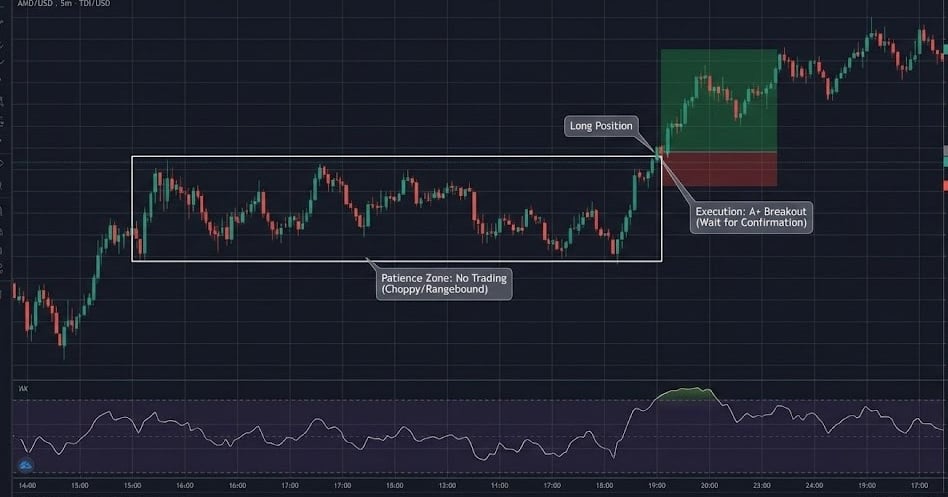
Defeating FOMO & Overtrading: The Sniper Protocol (2026)
Introduction: The Profitability of Inactivity
At SmartTradesZone, we understand that in the high-velocity world of 2026 trading, doing nothing is often the most profitable trade you can make. Yet, for 90% of traders, inactivity feels like failure; they mistake "motion" for "progress". FOMO (Fear Of Missing Out) is not just a feeling—it is a catastrophic leak in your risk management infrastructure that forces you to enter trades because price is moving, rather than because a valid setup has formed. To reach the elite level, you must transition from a "Machine Gunner" who sprays capital at every flicker on the screen to a "Sniper" who only pulls the trigger when the odds are overwhelmingly in their favor. We define FOMO as a biological "glitch" that turns a rational business operator into a desperate gambler. Overtrading is the inevitable result—a silent killer that drains your account through commissions, slippage, and low-probability entries. This playbook outlines the "Sniper Protocol" we use to eliminate impulsive entries and master the hardest skill in the 2026 market: The Art of Waiting.
In the world of professional trading, your bank account is often built on the trades you DIDN'T take. Yet, for the average retail trader, staring at a screen for three hours without clicking "Buy" or "Sell" feels like a wasted day. This is the root of FOMO (Fear Of Missing Out). It is the compulsion to participate in a move simply because the numbers are green and the chart is climbing.
Phase 1: The Biology of the Chase – Dopamine vs. Discipline
To defeat FOMO, you must understand that you are fighting your own evolution. When you see a stock like NVDA or a high-beta crypto asset ripping higher on massive green candles, your brain’s ventral striatum releases dopamine. This isn't the chemical of "pleasure"; it is the chemical of "anticipation." You feel a physical, agonizing need to participate before the "opportunity" is gone.
This is the same mechanism that drives slot machine addiction. When you click "Buy" during a vertical, parabolic rally, you aren't analyzing a technical setup; you are paying the market for a dopamine hit.
The Hard Truth: If your heart is racing as you enter a trade, you aren't trading. You are chasing a high. By the time the "retail crowd" feels the dopamine spike, the "Smart Money" is already preparing to sell their positions to you.
Phase 2: The Market Maker’s Liquidity Trap
Institutional algorithms in 2026 are specifically programmed to exploit human FOMO. They create "liquidity traps"—sudden, violent moves upward with no fundamental backing, designed to suck in retail traders who are afraid of being left behind.
* The Mechanism: The price breaks a minor level, retail FOMO kicks in, and everyone buys at once.
* The Result: This creates a massive pool of buy orders (liquidity). The algorithms then use that liquidity to fill their massive "Sell" orders at the absolute top.
Once the retail liquidity is exhausted, the price collapses, leaving FOMO traders "holding the bag" at the exact peak of the move.
Phase 3: The "Sit on Hands" Protocol
We enforce a physical and psychological protocol to combat the urge to chase. We call it "Sitting on Hands."
The Rule: If you feel the urge to trade a stock that has already moved more than 3% in the last 15 minutes, you are prohibited from entering until a "Base" forms.
The Logic: You cannot catch a train that has already left the station. Chasing a parabolic move destroys your [Risk-Reward Ratio Mastery]. If the move is already extended, your stop loss has to be miles away to be safe, which means your risk is too high for the remaining potential reward.
The Action: Physically remove your hands from the keyboard. Say out loud: "I missed the initial move. I will wait for the 5-minute flag or I will let it go."
Phase 4: The "A+ Filter" – Ending Ambiguity
FOMO thrives in the "Gray Area." When you don't know exactly what you are looking for, every candle looks like a potential breakout. We eliminate this by using a strict [Technical Analysis Mastery] checklist. You are only allowed to trade if the setup meets 4 out of 5 of the following "Sniper" criteria:
1. Trend Alignment: Is the price trending above the 9 EMA and VWAP?
2. Volume Confirmation: Is the current volume bar at least 150% of the previous 5 bars?
3. The Pullback Requirement: Has the stock consolidated or "flagged" for at least 3-5 candles? (Never buy a vertical line).
4. Relative Strength: Is this stock outperforming the SPY right now? (Refer to our [SPY Intraday Playbook] for market context).
5. Risk Definition: Is there a clear, technical support level where I can place a hard stop?
If you cannot check 4 boxes, it is a "B-Grade" setup. B-Grade setups are for amateurs. Snipers only take A+.
Phase 5: The "Lunch Hour" and Overtrading
Overtrading usually happens in two windows: the first 30 minutes (chasing the open) and the "Mid-Day Chop" (11:30 AM to 1:30 PM EST).
The Trap: During mid-day, volume drops. Price moves become erratic and "choppy." Traders get bored and start taking trades just to "feel something."
The Fix: The "Walk Away" Rule. Between 11:30 and 1:30, close your laptop. Go to the gym. Eat lunch away from your desk. Most traders lose more money in the "Lunch Hour" than they make in the morning.
Phase 6: Embracing JOMO – The Joy of Missing Out
Professional traders switch their mindset from FOMO to JOMO.
* FOMO: "I missed that 10% move, I'm a failure, I need to find the next one NOW."
* JOMO: "I saw that 10% move, realized it didn't meet my criteria, and successfully sat on my hands. I protected my capital. I won today."
Every time you successfully sit out a messy, choppy market or a parabolic chase, you are depositing "Mental Capital" into your account. You are training your neural pathways to prioritize discipline over dopamine.
Phase 7: The "One Good Trade" Mandate
The goal of a day trader is not to find ten trades; it is to find "One Good Trade." If you stare at the screen for four hours and only find one trade that meets your "A+ Filter," you have had a perfect day. If you find zero trades because the market was garbage, you have also had a perfect day because your account balance is exactly where it was this morning. You are still in the game.
Phase 8: Post-Trade Audit – Was it a Chase?
At the end of every day, look at your entries.
- Did you buy at the "Extension" (far away from the moving averages)?
- Did you buy because of a Twitter alert or a Discord pump?
If yes, label that trade "FOMO" in your journal. Once you see the dollar amount that FOMO costs you over a month, the "urge to chase" usually disappears, replaced by the "urge to stay profitable."
Summary: The Predator Mindset
The market is an infinite stream of opportunities. Missing one move does not matter. There will be another breakout in ten minutes, or tomorrow, or next week. Your job is not to "catch them all"; your job is to wait. You are a predator lying in wait for the perfect moment. When you stop chasing the market and start letting the market come to you, FOMO disappears, and professional consistency begins.