
Advanced Bankroll Management: Kelly Criterion & Risk of Ruin
Master institutional-grade bankroll management. Learn how to apply the Kelly Criterion formula, implement Fractional Kelly, and eliminate the Risk of Ruin.
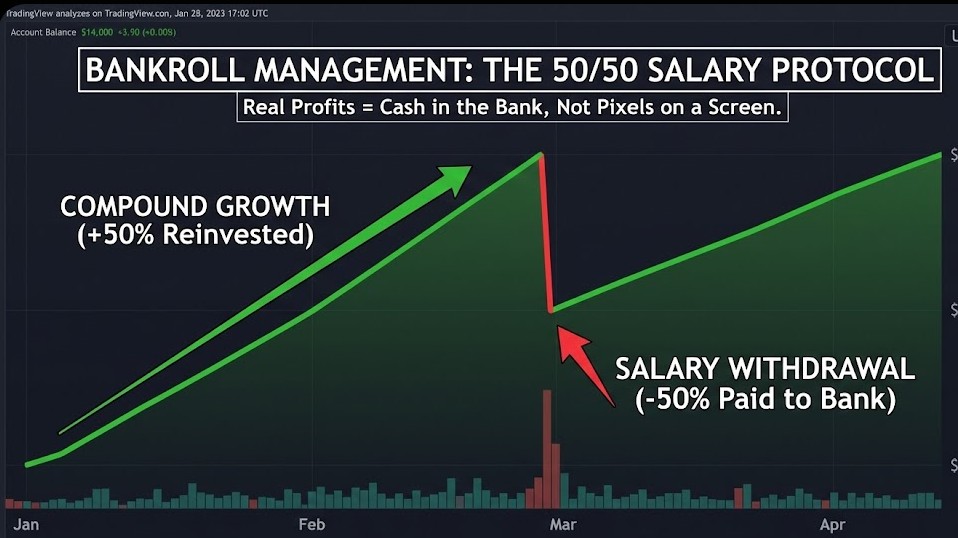
In any environment governed by mathematical probability and risk—whether you are executing options spreads on a trading platform, navigating a high-stakes card room, or allocating capital across sports analytics corridors—the absolute line between a professional operator and a reckless gambler is not defined by their strategy's predictive accuracy. Instead, it is defined entirely by their relationship with their capital base. To establish a highly profitable hub, one must first realize that a bankroll is not simply generic spending money; it is a dedicated, insulated pool of liquidity set aside exclusively for the purpose of funding a specific speculative enterprise.
To properly define a true bankroll, you must separate it entirely from your everyday personal finances. A professional’s bankroll does not contain the capital required to pay residential mortgages, utility bills, or daily living expenses. It is an isolated financial vehicle whose sole utility is to act as the raw material needed to generate future returns. When someone asks what the term "bankrolling" means in an institutional context, it refers to the strategic deployment of this dedicated capital base to completely fund an operation, ensuring it possesses enough financial depth to comfortably withstand normal, expected strings of statistical losses. If you fail to build this rigid structural wall between your net worth and your operational capital, the psychological pressure of losing "rent money" will inevitably hijack your rational decision-making engine, leading to emotional execution errors and rapid capital destruction.
Once the physical bankroll is established, the focus must shift immediately to mastering what is bankroll management. Bankroll management is the systematic, rules-based process of determining exactly what fraction of your total capital base is permitted to be exposed to risk on a single event, trade, or hand. It serves as your ultimate defense mechanism against volatility and variance. In any game or market involving random short-term distributions of outcomes, even a highly optimized system with a massive long-term mathematical edge will eventually endure prolonged losing streaks. Bankroll management is the mathematical architecture designed to ensure that when these unavoidable dry spells hit, the financial damage inflicted on your account is completely negligible, keeping your operation fully alive to exploit your edge over thousands of future iterations.
The absolute cornerstone of a robust management framework is the total elimination of arbitrary sizing. A professional never chooses their exposure based on a gut feeling, a streak of recent wins, or a desire to aggressively "make back" lost capital. Instead, the size of every single placement is calculated mechanically as a strict, fixed percentage of the current, fluctuating bankroll balance—typically ranging between 1% and 5% depending on the specific volatility profile of the asset class. By standardizing your risk allocation as a dynamic percentage rather than a fixed dollar amount, your position sizing automatically scales down during an equity drawdown to preserve your core principal, and automatically scales up during a winning streak to maximize compounding growth. This disciplined, emotionless approach transforms speculation from a high-stress game of chance into a cold, calculated business of probability management.a
The Foundations: What is Bankroll and Bankroll Management?
Transitioning from a broad macro understanding of capital segregation to practical execution requires analyzing the distinct operational rules of your chosen discipline. While a stock or options trader measures risk across chart-based technical invalidation points, a speculator operating within the arenas of professional poker or competitive sports analytics must contend with a completely different form of volatility. In these environments, the underlying asset is not a corporate share, but rather an individual event, a single hand of cards, or a sports matchup governed by fixed probabilistic distributions and massive short-term variance. To survive, an operator must translate their general capital rules into the highly specialized metrics native to these fields, specifically targeting high-ranking operational frameworks like what is bankroll in poker settings and what is bankroll management sports betting strategies.
In the poker environment, your total dedicated capital is never measured in generic dollar amounts. Instead, a professional card player calculates their financial health using a specialized operational metric known as the buy-in. A buy-in represents the maximum amount of money permitted on the table for a single session or the fixed entry fee required to register for a competitive multi-table tournament. By standardizing your entire capital stack into individual buy-in units, you strip away the emotional weight of the cash itself, allowing you to view your capital as a collection of industrial tools required to execute an edge. Depending on the exact structure of the game you are playing, the strictness of your buy-in requirements shifts dramatically to counteract the natural wave of mathematical variance:
Live and Online Cash Games: Because cash game structures allow you to freely top up your chips between hands and feature a more consistent distribution of outcomes, a standard conservative framework mandates a minimum baseline of 20 to 30 full buy-ins for recreational play. However, if you transition to a professional environment where you must absorb multi-week downswings without risking your livelihood, that requirement aggressively scales up to a minimum of 50 to 100 full buy-ins for the specific stake level you are targeting.
Multi-Table Tournaments (MTTs): Tournaments feature an incredibly top-heavy payout structure where a player can easily go dozens of consecutive events without securing a single cash return. Because the statistical variance in large-field tournaments is exceptionally brutal, a professional tournament strategist maintains a massive capital cushion of at least 100 to 200 total tournament buy-ins to completely insulate their net worth from standard, expected dry spells.
The Shot-Taking and De-escalation Protocol: A masterclass poker strategy relies on a fluid, rules-based mechanism for moving up and down in stakes. A player might dedicate 5 buy-ins of their bankroll to take a calculated "shot" at a higher-stakes, more lucrative game. However, if those 5 buy-ins are lost, a strict behavioral rule forces an immediate, emotionless de-escalation back to the lower, safer stakes to rebuild the core capital base, completely eliminating the risk of a pride-driven account liquidation.
When pivoting to the landscape of statistical sports analytics and competitive betting, the operational language shifts from buy-ins to units. A unit is a standardized percentage of your total starting bankroll, typically locked firmly between 1% and 2% for the vast majority of professional modelers. If an analyst operates with a total sports bankroll of ten thousand dollars, a single standard unit represents exactly one hundred dollars. Standardizing your wagers into precise units ensures that your financial exposure remains perfectly uniform across various sports books, regardless of the individual odds or the specific sports league you are tracking.
To execute a sports betting bankroll management plan effectively, a speculator must choose between two primary unit-allocation methodologies: flat betting and proportional variable betting. In a flat betting system, the operator applies exactly one unit to every single wager that clears their analytical model's edge threshold, completely regardless of their personal confidence level or the short-term direction of their recent results. This methodology provides an incredibly stable equity curve, making it the preferred approach for high-volume modelers who execute hundreds of wagers per week. Conversely, a proportional variable system allows the unit size to scale dynamically between one and three units, matching the precise mathematical advantage identified by the model or adapting to changing price discrepancies in the market line.
The absolute highest-priority trap that a sports betting bankroll plan is designed to eradicate is the catastrophic psychological failure mode known as loss-chasing, or the progressive staking system. When an amateur experiences a string of consecutive losing wagers, their ego triggers a state of emotional panic. In a desperate attempt to erase their losses in a single event, they break their rules and double their unit size on the next matchup. This dangerous behavioral spiral is known mathematically as a Martingale approach, and it represents the fastest track to absolute financial ruin. Because sports outcomes contain an element of short-term randomness, a natural losing streak will eventually occur. If you are progressively ramping up your unit sizes during a downswing, a standard streak of bad luck will rapidly compound, outscaling your total available capital and completely destroying your bankroll before your long-term statistical edge ever has the physical time to play out.
Ultimately, whether you are holding a hand of cards or evaluating a sports betting line, the underlying mechanical engine remains entirely identical. You must completely decouple your emotional state from the outcome of any individual event. A professional accepts that short-term results are fundamentally noisy and unpredictable. By strictly enforcing your buy-in thresholds, locking your standard unit sizes to realistic percentages, and treating every placement as a single data point in a sample size of thousands, you transform speculation into a cold, mechanical process of long-term capital compounding.
The Mechanics of Bankroll Management in Poker and Competitive Betting
To elevate your trading hub or speculative enterprise to an institutional standard, an operator must eventually transition from basic defensive survival to aggressive capital optimization. While utilizing a generic, fixed-percentage risk model is an excellent starting point for protecting a baseline account, it fails to account for changes in the scale of your mathematical advantage. In the real world, your statistical edge is not a static number; it expands and contracts based on shifting market regimes, game dynamics, and line discrepancies. To extract the absolute maximum value from a positive-expectancy environment without accidentally exposing your capital to catastrophic drawdowns, an advanced speculator must integrate mathematical growth models, leverage quantitative formulas, and deploy automated logging infrastructure.
The journey into advanced capital optimization begins with the implementation of a legendary mathematical formula known as the Kelly Criterion. Developed by researcher John L. Kelly Jr. in the 1950s, this formula was originally designed to optimize signal routing data but was quickly adapted by sophisticated quantitative hedge funds and elite card players to determine the mathematically perfect size of a wager or trade allocation. The classic Kelly Criterion formula is expressed as follows:
The Kelly Criterion Formula: f* = (bp - q) / b
Within this formal equation, each variable represents a critical component of your operational edge:
f* represents the optimal fraction of your current total bankroll that should be allocated to the upcoming position.
b is the net fractional odds received on the wager, representing the structural payout ratio (e.g., receiving 2:1 odds means b = 2).
p represents the exact statistical probability of a winning outcome occurring.
q represents the probability of a losing outcome occurring, which is calculated simply as 1 - p.
When you input your metrics into this formula, it spits out an exact percentage allocation that maximizes the logarithmic growth of your capital over a long-term horizon. If the formula yields a result of $0.05$, the system is informing you that based on the size of your advantage and the payout structure, allocating exactly 5% of your bankroll maximizes your compounding curve while safely avoiding capital depletion.
However, executing a "Full Kelly" strategy in live market environments introduces a massive operational vulnerability known as model-estimation risk. The formula assumes that your calculated win probability ($p$) is completely flawless and absolute. In reality, human error, incomplete data, and changing market conditions frequently cause speculators to slightly overestimate the strength of their edge. If you apply the Full Kelly formula to an over-estimated edge, the resulting over-leverage can subject your account to extreme, heart-stopping volatility and massive peak-to-trough drawdowns that can easily destroy your psychological composure.
To insulate your capital from this estimation friction, advanced professionals implement a modified framework known as Fractional Kelly asset allocation. Instead of executing the raw percentage provided by the formula, the operator applies a consistent fractional multiplier—most commonly Half Kelly (0.5x) or Quarter Kelly (0.25x). If the raw Kelly formula suggests a 10% position size, a strict Quarter Kelly policy automatically scales that exposure down to a highly secure 2.5% allocation. This deliberate reduction provides an immense structural buffer: it reduces overall portfolio volatility by up to 50%, completely protects the account from minor mathematical calculation errors, and only causes a negligible reduction in the long-term compounding growth rate.
1. Raw Data Inputs: Gathers core metrics including Win Rate, Payout Odds, and Account Size.
2. Kelly Formula: Processes these inputs to calculate the Maximum Theoretical Growth Rate.
3. Fractional Filter: Scales down the calculated exposure by 50% or 75% (applying Half Kelly or Quarter Kelly parameters).
4. Live Execution: Deploys the optimized position size to achieve steady compounding with near-zero volatility.
By mastering these mathematical scaling models, a speculator achieves the ultimate objective of professional risk management: the total eradication of the Risk of Ruin. In quantitative finance, the risk of ruin is a non-linear mathematical probability curve that maps out the likelihood of an account hitting absolute zero during a prolonged sequence of adverse outcomes. Because short-term market data is plagued by random noise and variance, even an edge that wins 60% of the time will inevitably experience a sequence of ten consecutive losses over a large enough sample size.
If your position sizing rules are loose, arbitrary, or too aggressive, that single streak of bad luck will trigger a total wipeout. However, when you couple an asymmetric risk-reward ratio with a Fractional Kelly allocation model, your risk of ruin drops exponentially to near-zero. As your bankroll expands, your unit sizes grow to capture maximum value; as your bankroll contracts during a standard drawdown, your unit sizes automatically shrink in real-time, creating an unbreachable mathematical floor that ensures your operational hub can never be fully liquidated.
To execute this level of quantitative discipline seamlessly without introducing human calculation lag during live market sessions, you must deploy a robust data-tracking stack. Relying on memory or disorganized mental notes to track your capital health is an immediate recipe for failure. Modern professionals treat their capital logs with the same meticulous precision as an corporate balance sheet, utilizing advanced tracking apps, custom cloud databases, and automated variance simulators to maintain absolute clarity over their operation. A professional-grade capital tracking ecosystem requires several core structural components:
Real-Time Variance and R-Multiple Tracking: Your logging software must track your wins and losses not just in raw dollar amounts, but in standardized units or risk multiples (R-multiples). This allows you to evaluate whether your edge is performing up to its statistical baseline, completely independent of the fluctuating size of your account balance.
Dynamic Drawdown Circuit Breakers: Advanced tracking dashboards feature automated visual warnings and hard operational triggers. If your total bankroll drops past a pre-programmed structural threshold—such as a 10% or 15% peak-to-trough contraction—the system flags a regime alert, forcing the operator to downsize their units immediately to protect the core principal.
Granular Sub-Sleeve Segmentation: If you allocate capital across multiple distinct strategies—such as day trading large-cap equities, swing trading options spreads, or executing long-term value investments—your tracking infrastructure must segment these operations into isolated digital sleeves. This prevents a temporary drawdown in a high-volatility strategy from bleeding into and disrupting the capital requirements of your stable income overlays.
Comprehensive Emotional and Environmental Logs: Beyond tracking pure financial data, elite operators record qualitative variables for every single execution, including sleep quality, market conditions, and personal stress levels. Over time, data analysis of these metrics can reveal hidden behavioral leaks, showing you exactly which environmental factors lead to rule violations and unforced capital losses.
Ultimately, transitioning to an advanced bankroll management system requires a total shift in identity. You must stop viewing yourself as a predictor of future events and start operating as a disciplined manager of risk and probability. The individual outcomes of your next ten trades, wagers, or hands are fundamentally random, uncontrollable, and irrelevant. By grounding your trading hub in the rigid mathematics of the Kelly Criterion, enforcing a fractional execution layer, and maintaining an flawless electronic record of your performance, you completely remove luck from your long-term financial equation. You strip away the emotional highs and lows of speculation, turning your platform into a cold, mechanical wealth-extraction engine built for multi-decade compounding success.
Advanced Systems: Tracking Apps, Formulas, and Eliminating the Risk of Ruin
If you want to master more high-velocity market events, check out our other comprehensive trading guides:
➡️VIX Trading Strategy Guide
➡️How to Trade Economic Data
➡️How to Trade Earnings Reports