
Long Straddle Option Trading Strategy Explained: The Ultimate Setup 2026
Master the long straddle option trading strategy. Learn what a straddle trade is, how to structure the optimal setup, and if it's a good strategy for you.
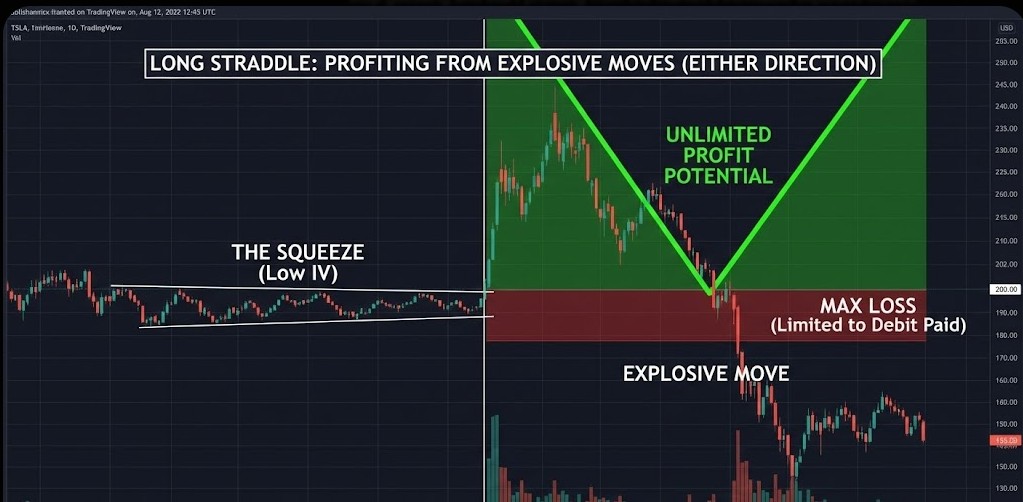
The financial markets are fundamentally driven by an obsession with direction. Most market participants spend their time attempting to predict whether a stock will rise or fall. However, professional options traders recognize that direction is only one dimension of the market. The long straddle option trading strategy flips the traditional paradigm on its head by allowing a trader to profit purely from movement and intensity, completely independent of the actual direction the asset moves.
At its core, a long straddle is a volatility-buying strategy. When a trader deploys this setup, they are expressing a clear conviction: the underlying stock is about to experience a massive, explosive price movement, but the near-term direction of that movement is entirely unknown. This makes it an incredibly powerful tool around major, binary market events where the outcome will trigger a violent reaction in the stock price, but the sentiment could swing drastically either way.
To achieve this directionally neutral posture, the trade setup requires the simultaneous purchase of two separate options contracts on the exact same underlying stock. The trader buys one call option and one put option. To maintain absolute neutrality, both of these options must share identical parameters:
They must feature the exact same strike price—which is selected to be as close to the current market price of the stock as possible, known as at-the-money.
They must share the exact same expiration date.
By buying the call option, the trader secures the right to purchase the stock, protecting and profiting from a massive breakout to the upside. Conversely, by buying the put option, the trader secures the right to sell the stock, protecting and profiting from a catastrophic breakdown to the downside. Because both contracts are purchased simultaneously, the trader establishes a position that wins if the stock skyrockets, and also wins if the stock plummets.
The primary engine behind this strategy is not just the movement of the stock price, but the behavior of implied volatility. Implied volatility represents the market's expectation of how much a stock will move in the future. Because options are priced based on this expectation, a sharp increase in market uncertainty will inflate the premium value of both call and put options. Therefore, the long straddle thrives in environments where the market begins to price in extreme uncertainty, allowing the trader to benefit from both a physical expansion of the stock price and an inflation of the options' premium values due to surging volatility.
What is a Long Straddle Strategy? (Long Straddle Explained)
Successfully executing a long straddle option trading strategy requires meticulous planning, precise timing, and a deep understanding of underlying stock characteristics. It is far more than simply buying two contracts and hoping for the best. To construct a setup that genuinely commands a high probability of success, a trader must follow a strict filtering process that begins with asset selection.
The ideal candidate for a long straddle is an underlying stock that possesses high beta, historical liquidity, and a documented track record of aggressive gaps after major announcements. Trading this strategy on a slow-moving, low-volatility utility stock is a recipe for guaranteed capital depletion. Instead, traders look for high-growth technology firms, pharmaceutical companies awaiting crucial regulatory decisions, or equities heavily tied to impending macroeconomic data releases. The presence of a known, definitive catalyst is the primary trigger for the strategy. Typical catalysts include quarterly earnings reports, product launch keynotes, key legal verdicts, or federal interest rate decisions. Traders often analyze prior cycles to ensure the stock has historically moved significantly more than the implied market makers' expected move, confirming that the asset has the explosive physical capability to shatter expectations.
Once the target asset is identified, the trader must execute the setup by selecting the at-the-money strike price. For instance, if the underlying equity is actively trading near a specific whole number, the trader selects the closest available options chain strike to that number. Precision here ensures that the delta values of both the call and the put are roughly equal, establishing the necessary directional equilibrium from day one. This initial state is known as being delta-neutral. Because the position features high positive gamma, the overall delta of the trade will rapidly shift in favor of whichever direction the stock explodes. As the stock breakouts upward, the call option delta rapidly expands toward one, while the put option delta collapses toward zero. Conversely, if the stock plunges, the put option delta gains full control while the call premium falls off.
Selecting the expiration date requires a delicate balancing act between contract cost and time decay, which options traders refer to as theta. Options are melting assets; every day that passes erodes a portion of their value. Because a long straddle requires purchasing two long premium positions simultaneously, the trader faces double the exposure to daily time decay. If a trader selects an expiration date that is too close to the current date, the daily time decay accelerates dramatically, eroding the trade's value before the big move can occur. Conversely, selecting an expiration date months into the future requires paying a significantly higher premium, which dramatically raises the upper and lower breakeven hurdles for the trade to become profitable. A common sweet spot for event-driven straddles is selecting an expiration cycle that falls one to two weeks after the expected catalyst event, giving the asset sufficient time to run while keeping the initial entry cost manageable.
Finally, a professional setup demands a thorough evaluation of the current volatility environment before entering the trade. This relies heavily on vega, the option Greek that measures sensitivity to changes in implied volatility. If the market has already hyper-inflated the options premiums in anticipation of an event, the straddle becomes excessively expensive, making the breakeven targets nearly impossible to reach. The savviest traders look to enter their long straddles days or even weeks prior to the catalyst, buying the options when implied volatility is relatively subdued. As the date of the event draws closer and the broader market begins to panic or speculate, the implied volatility naturally expands, lifting the premium value of both contracts before the stock even moves a single penny. Position sizing must be strictly controlled, as the total premium paid represents the maximum risk of the position, and a failure to clear the breakeven boundaries can result in a total loss of the capital deployed if held into expiration.
The Ultimate Long Straddle Option Trading Strategy and Setup
To truly determine whether the long straddle is a good strategy for your specific trading hub and overall portfolio, it is essential to analyze how it functions under actual market conditions. Looking at a practical case study illustrates the profound power—and the inherent dangers—of deploying this directionally neutral strategy.
Imagine a major technology corporation is currently trading at exactly one hundred dollars per share. The company is scheduled to release its highly anticipated quarterly earnings report after the closing bell tomorrow. Market sentiment is completely fractured: one faction of analysts expects a historic revenue beat driven by new product adoption, while another faction anticipates a massive guidance cut due to supply chain disruptions. The market makers are pricing in a massive move, but the ultimate direction remains a coin flip.
To capitalize on this impending volatility, an options trader enters a long straddle position. They purchase a one hundred strike call option contract for a premium of five dollars, and simultaneously purchase a one hundred strike put option contract for a premium of five dollars. The total upfront capital required to establish this trade is the combined cost of both premiums, which amounts to ten dollars per share. Because a standard equity options contract controls one hundred shares of the underlying stock, the trader pays a total debit of one thousand dollars to open this single straddle position. This total debit represents the maximum risk of the trade; the trader can never lose more than the one thousand dollars initially deployed.
Let us analyze the first potential outcome: the earnings report is a spectacular success. The stock experiences a massive wave of buying pressure and opens the following morning trading at one hundred and thirty dollars per share. In this scenario, the one hundred strike put option is completely out-of-the-money and collapses to a value of zero. However, the one hundred strike call option is now deeply in-the-money. Because the stock is trading at one hundred and thirty dollars, the call option possesses at least thirty dollars of pure intrinsic value. Having paid ten dollars total to enter the entire straddle, the trader can sell the call option back to the market for thirty dollars, securing a net profit of twenty dollars per share, or two thousand dollars total on the contract. The explosive move to the upside completely overwhelmed the total loss of the put option contract.
Now let us analyze the inverse outcome: the company completely misses its numbers, and the stock crashes down to seventy dollars per share. In this environment, the call option expires completely worthless. However, the one hundred strike put option is now heavily in-the-money, boasting thirty dollars of intrinsic value because it grants the holder the right to sell a seventy-dollar stock for one hundred dollars. The trader sells the put option for thirty dollars, walking away with the exact same net profit of twenty dollars per share.
Despite these highly lucrative outcomes, the ultimate question remains: is the long straddle a good strategy for consistent profitability? The answer depends entirely on your timing and selection, because the strategy carries a massive Achilles' heel known as the volatility crush and dual time decay.
Consider a third, far more common scenario. The company releases its earnings, and the results are entirely inline with expectations. The stock barely reacts, ticking up slightly to one hundred and one dollars per share. Because the stock did not experience an explosive move, neither the call nor the put has gained any meaningful intrinsic value. Far worse, the moment the earnings data becomes public, the market’s uncertainty completely evaporates. This triggers an immediate, catastrophic collapse in implied volatility. The premium value of both the call and the put will instantly deflate as market makers strip away the volatility premium. The five-dollar call and five-dollar put might instantly drop to a value of fifty cents each. The trader is left with a position worth only one dollar, suffering a ninety percent loss on their capital simply because the underlying stock failed to move with enough force to outrun the sudden drop in volatility.
Ultimately, the long straddle is an exceptional strategy when used selectively by disciplined traders who can accurately identify underpriced volatility prior to major events. It is a terrible strategy for passive investors or those who buy into highly publicized events at the last minute when options premiums are already inflated to an absolute premium. Success relies on entering early, keeping a strict cap on the total cost of admission, and ensuring the underlying stock has the raw explosive power to shatter its expected boundaries.
Long Straddle Real-World Example: Is It a Good Strategy?
If you want to master more high-velocity market events, check out our other comprehensive trading guides:
➡️$TSLA Options Trading Strategy Guide
➡️Covered Call ETFs Explained: High Yields, NAV Decay & Risks
➡️How to sell Cash Secured Puts for Consistent Income
➡️How to trade a Bull Call Spread: Ultimate Guide