
Master Trading Discipline: Build Unshakeable Self-Control for Consistent Wins
Learn how to master trading discipline with proven strategies for emotional control, rule-following, and consistent execution. Build the self-control that separates professional traders from amateurs.
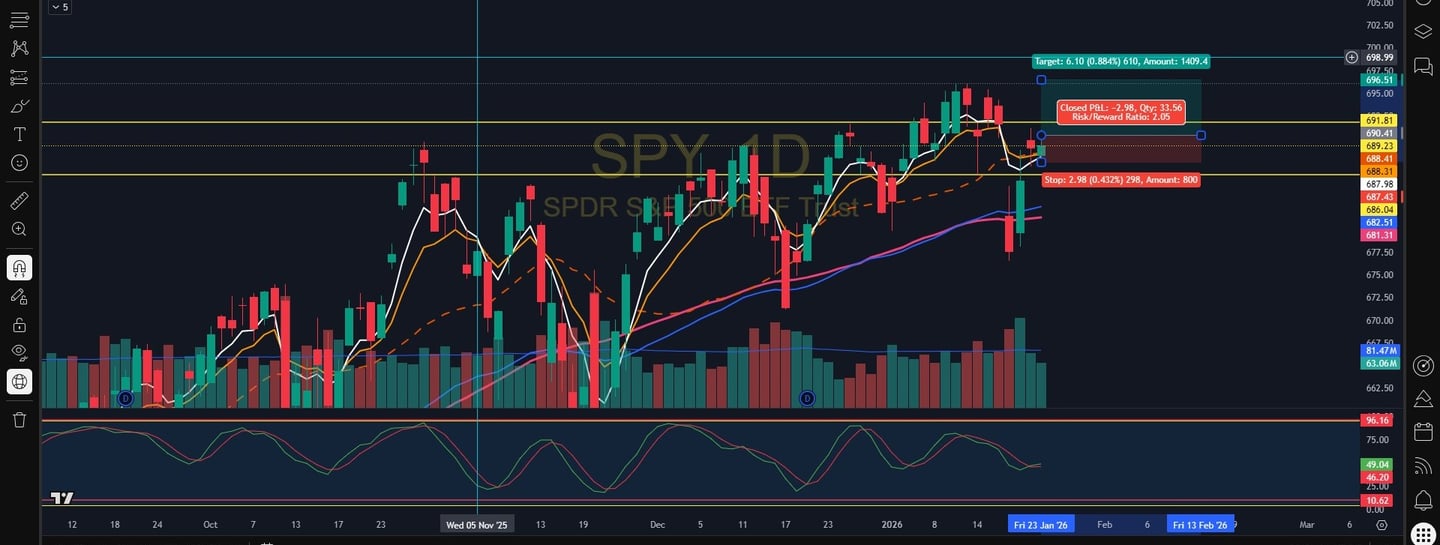
Master Trading Discipline: Building Your Professional System (2026)
Introduction: The Discipline Myth
At SmartTradesZone, we don't view discipline as a personality trait—we view it as a hardcoded operating system. While amateurs rely on fragile willpower to survive the market's chaos, we empower you with "Circuit Breaker" protocols and clinical execution checklists that remove human error from the equation. By mastering this playbook, you stop being a victim of your own biological impulses and start trading with the cold, calculated precision of an institutional machine.
Most traders think discipline is a personality trait. They believe you are either born with patience, or you aren't. This is false. In trading, discipline is not a character trait—it is a system. Amateurs rely on willpower to resist the urge to overtrade. Professionals rely on strict rules that remove willpower from the equation entirely.
When the VIX is spiking and your P&L is swinging, your "fight or flight" response takes over. You cannot trust your brain in that moment of chemical chaos. You can only trust your protocol. This playbook outlines the exact psychological triggers that destroy accounts and the "Circuit Breaker" rules we use at Smart Trades Zone to neutralize them before they neutralize your bank account.
Phase 1: The Biology of a Blowup
To master discipline, you must understand why you lose control. It starts with the Neurochemistry of the Gamble. When you enter a trade, your brain releases dopamine—the same chemical hit a gambler gets at a slot machine or an addict gets from a drug.
1. The Greed Spike: If you win, you feel invincible. Your brain screams for more, leading you to ignore your [Position Sizing Mastery] rules and double down on the next "sure thing."
2. The FOMO Trap: Seeing a stock rip higher triggers a fear response in the Amygdala. You feel physical pain from being left behind, causing you to "chase" the top and buy when institutional sellers are looking for liquidity.
3. The Revenge Loop: After a loss, your logical brain shuts down. You aren't trading the chart anymore; you are trading to stop the pain of losing money. This is "Tilt," and it is the primary cause of account liquidation.
We cannot stop these biological reactions, but we can build walls to contain them. Discipline is the cage we build for the tiger of emotion.
Phase 2: The 3 Rules of Professional Engagement
We use three non-negotiable rules to override our biology. These are not suggestions; they are mandates that protect the business.
Rule #1: The "3-Bullet" Chamber (Curing Overtrading)
Overtrading is the silent killer of retail accounts. It racks up commissions, spreads focus thin, and increases exposure to random market noise.
- The Rule: You have a maximum of 3 trades per day.
- The Logic: Imagine you are a sniper with only 3 bullets in your rifle. You wouldn't fire at a moving target in the fog. You would wait hours for the perfect, high-probability setup found in our [Support & Resistance Playbook].
- The Circuit Breaker: Once you click "Buy" for the third time, your trading day is over. Win or lose. Close the platform. Log off.
Rule #2: The 15-Minute "Cool-Off"
The most dangerous time to trade is immediately after a realized loss. This is when the "Revenge Mode" chemicals are at their peak.
- The Rule: No trading for 15 minutes after a realized loss.
- The Action: If you get stopped out, physically stand up. Walk away from the screen. Get a glass of water. Perform 20 pushups. Do anything that breaks the visual loop of the chart.
- Why It Works: It takes roughly 15 minutes for the adrenaline spike from a loss to subside and for the Prefrontal Cortex (the logic center) to come back online.
Rule #3: The "Hard Stop" Mandate
"Mental stops" are a dangerous myth. In a fast-moving market, you will freeze. You will bargain. You will "hope."
- The Protocol: You must enter your Hard Stop Loss order at the exact moment you enter the trade.
- The Math: Your stop loss placement dictates your share size, not the other way around. Risk Amount ($) / Stop Distance ($) = Share Size. This ensures you never lose more than 1% of your account, even if you are "wrong."
Phase 3: The "Tilt Test" (Internal Audit)
Before every trade, you need to audit your emotional state. If you spot any of these "Red Flags," you are on "Tilt" and should not trade.
1. Revenge: "I need to make back that $500 I just lost."
2. Desperation: "This setup has to work, I’m behind on my monthly goal."
3. Gambling: "I'll double my size just this once to catch up."
4. Boredom: "The market is slow, I'll just scalp this for fun."
If you hear any of these thoughts, shut down the terminal. The market will be there tomorrow. Your capital might not be.
Phase 4: The Pre-Trade Execution Checklist
Discipline is executing a process, not a result. Print this checklist and tape it to your monitor. Do not click "Buy" until you have checked every box.
- [ ] Trend Check: Is the stock aligned with the 9 EMA and VWAP?
- [ ] Volume Check: Is there "Institutional Participation" confirming the move?
- [ ] Stop Loss Defined: Is my hard stop set in the system?
- [ ] Risk Accepted: Am I 100% okay with losing this specific dollar amount?
- [ ] Target Set: Is the reward at least 2x the risk (The [Risk-Reward Ratio Mastery] standard)?
Phase 5: The "Quality Over Quantity" Mindset
In the world of Smart Trades Zone, we prioritize the "Quality" of the setup over the "Frequency" of the trade.
- A "Grade A" Trade is one that fits all your criteria. If you only see one of these a week, you only trade once a week.
- The disciplined trader realizes that "Sitting on your hands" is a valid and often highly profitable position. Capital preservation is the first step to capital appreciation.
Phase 6: Managing the "Winning Streak" Ego
Discipline is just as hard when you are winning as it is when you are losing. Success breeds overconfidence. After a string of wins, you start to feel like you "understand" the market's soul. You start taking "Grade B" setups because you think you can't lose.
- The Fix: Treat every trade as a completely new, independent event. The market doesn't know you won the last five trades, and it doesn't care. Stay humble or the market will humble you.
Summary: The Machine Mindset
Discipline isn't about suppressing your emotions; it's about building a system that renders them irrelevant. By limiting your shots, enforcing cool-off periods, and strictly sizing your positions, you protect your account from the one thing that can destroy it: You.
Stop trying to be a "genius" and start being a "machine." Follow the checklist. Respect the stop. Pay the CEO. This is how empires are built in the market—one disciplined trade at a time.